
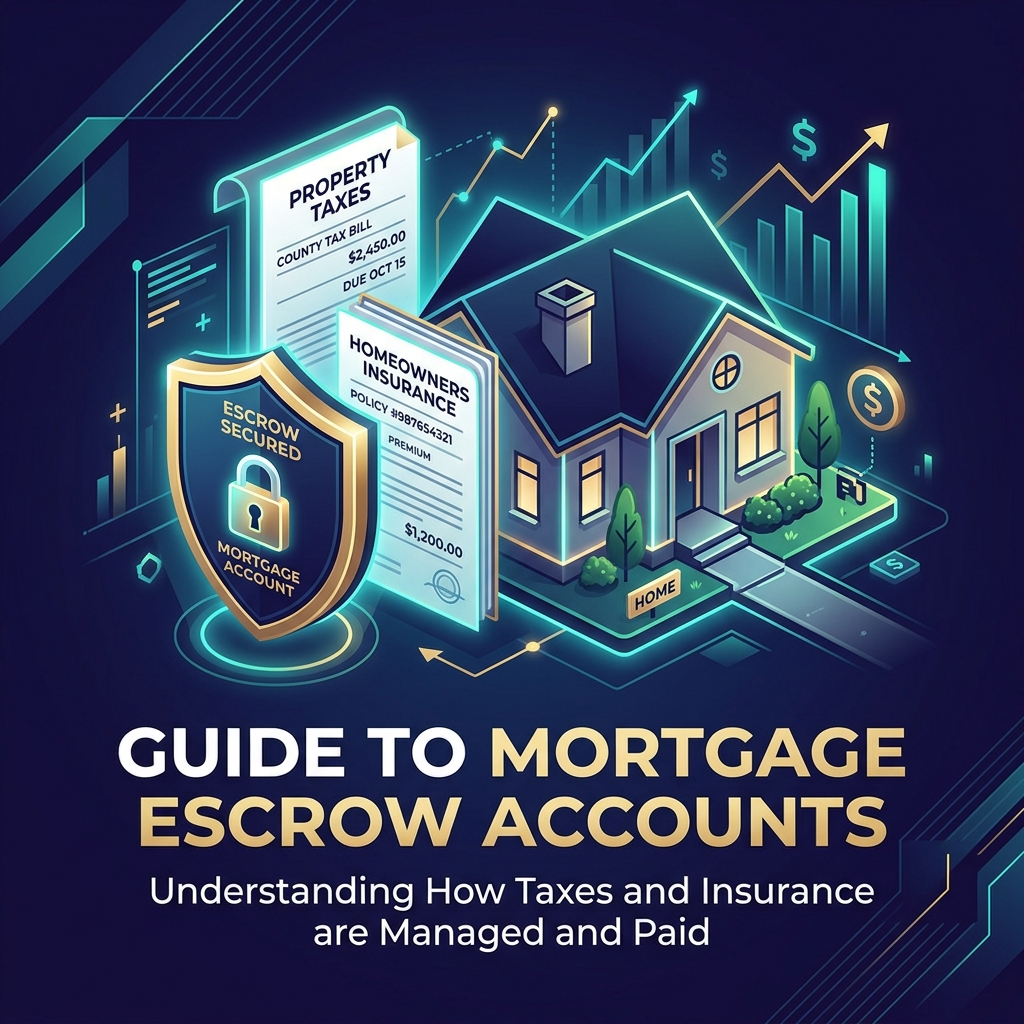
An escrow account is a neutral financial holding account managed by your mortgage lender that automatically collects, holds, and pays your property taxes and homeowners insurance premiums on your behalf. Lenders divide your annual tax and insurance bills by 12 and add that amount directly to your monthly mortgage payment (under the PITI payment structure). When these bills are due, the lender pays them directly using the funds in your escrow account. Most lenders also require an "escrow cushion" to cover rising costs. An annual escrow analysis reviews your account, resulting in either an escrow refund for surpluses or adjusted monthly payments to cover escrow shortages.
For most homeowners, writing a single monthly check for housing expenses is much easier than tracking variable local property tax deadlines and annual insurance policies. Lenders simplify this process by setting up a dedicated escrow account. This account acts as a financial holding tank that secures the cash required to pay your property obligations.
Escrow is integrated directly into the standard monthly mortgage cycle. If you want to see how taxes and insurance affect your overall payment breakdown, you can evaluate your numbers with our understanding PITI payments guide or calculate your monthly amortization limits using our interactive mortgage calculator.
What is a Mortgage Escrow Account?
When you take out a mortgage, your lender wants to guarantee that their collateral, which is your house, is protected. If you default on property taxes, the local county government can place a lien on your property and seize it in a tax foreclosure. If you do not pay your homeowners insurance premium and your house burns down, the lender's security asset is destroyed.
To eliminate these risks, lenders set up an escrow account. Every month, a portion of your total payment is directed into this account, where it accumulates until your property tax and insurance bills are issued. When those bills arrive, the lender uses the accumulated funds in the escrow account to pay the county tax collector and your insurance company directly.
The Monthly Escrow Cycle
Understanding how your monthly check is allocated is crucial. Your complete mortgage payment is structured under the PITI (Principal, Interest, Taxes, and Insurance) model. The first two components (Principal and Interest) go directly toward paying off your debt. The final two components (Taxes and Insurance) are deposited into your escrow account.
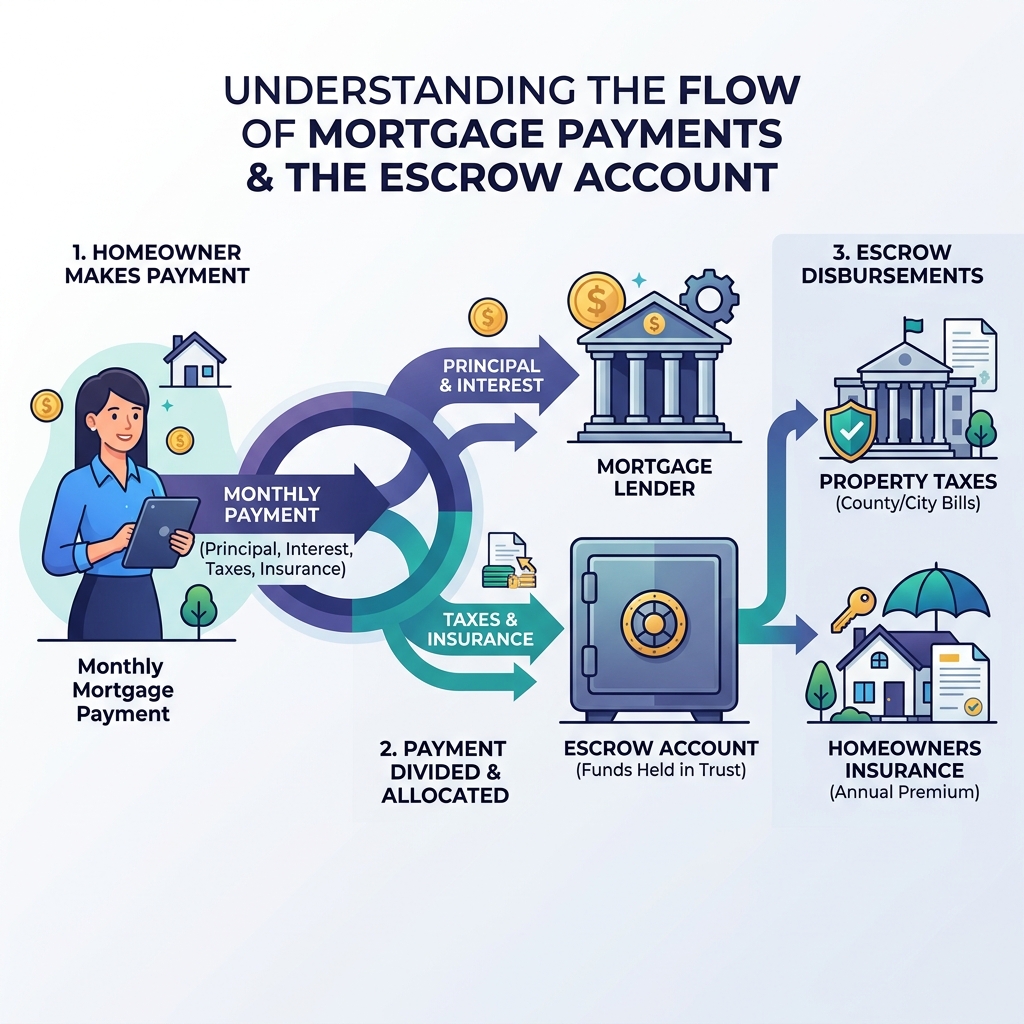
Figure 1: Diagram displaying how your single monthly check is divided: Principal and Interest pay down the loan balance, while Taxes and Insurance flow into the escrow account to cover annual property bills.
Let us look at a simple math example to understand this monthly cycle:
1. Property Expenses:
- Annual Property Taxes: $3,600 / year
- Annual Homeowners Insurance: $1,200 / year
- Total Annual Bills: $3,600 + $1,200 = $4,800 / year
2. Monthly Escrow Contribution:
- Monthly Tax Allocation: $3,600 / 12 = $300 / month
- Monthly Insurance Allocation: $1,200 / 12 = $100 / month
- Total Escrow Portion: $300 + $100 = $400 / month
3. Monthly Payment Split:
- If your loan Principal & Interest (P&I) is $1,600:
- Your total monthly check is: $1,600 (P&I) + $400 (Escrow) = $2,000 / month
The Escrow Cushion and Annual Escrow Analysis
Property taxes and insurance premiums are rarely static. Municipalities adjust tax rates based on reassessed home values, and insurance companies hike premiums to match construction replacement costs. Under federal regulations set by the Consumer Financial Protection Bureau (CFPB) through the Real Estate Settlement Procedures Act (RESPA), lenders are permitted to hold a minimum backup balance, known as an escrow cushion, equal to up to two months of escrow payments. This cushion prevents the account from falling into a negative balance if bills increase.
Every year, your lender must run a formal escrow analysis to compare their projections with actual expenditures. This audit leads to two potential outcomes:
Escrow Surplus (Overpayment):
If your taxes or insurance premiums were lower than estimated, the account will have excess funds. Under RESPA rules, if the surplus exceeds $50, the lender must mail you a refund check for the difference. If the surplus is under $50, they can apply it to next year's bills or reduce your upcoming payment.
Escrow Shortage (Underpayment):
If taxes or insurance premiums rose during the year, your escrow account will face a shortage. Lenders will present two choices to cover the difference: you can pay the full shortage balance as a one-time lump-sum check, or you can spread the shortage over 12 months, which increases your monthly payment.
How to Waive Your Escrow Account
Some homeowners prefer to manage their own property bills to earn credit card points on insurance premiums or collect interest on their tax savings. According to standard underwriting guidelines outlined by secondary mortgage giants like Fannie Mae, conventional mortgage borrowers can waive their escrow requirement if they have a loan-to-value (LTV) ratio of 80% or lower (which translates to a down payment of at least 20% at purchase).
Keep in mind that FHA, VA, and USDA loans strictly mandate lender-managed escrow accounts for the lifetime of the mortgage. Additionally, if you waive your escrow account, you assume full responsibility for making timely county tax payments and renewing your insurance policies. A failure to pay these obligations on time can trigger lender-placed insurance, which is significantly more expensive, or prompt the lender to reinstate a mandatory escrow structure immediately.
The Bottom Line
While an escrow account slightly increases your monthly check, it provides excellent safety and peace of mind by automating complex property bills. Homeowners should always review their annual escrow statement and maintain cash reserves to offset potential tax hikes or premium changes.
Calculate Your Total Monthly PITI
Estimate how much of your total payment will be split between principal, interest, local property taxes, and homeowners insurance.