The Complete Guide to Homebuying Finance & Mortgage Mechanics

Navigating Real Estate Finance
Acquiring a home is one of the most substantial financial commitments most consumers will encounter. Navigating this transaction effectively requires a solid understanding of mortgage mechanics, amortization curves, and systemic secondary fees.
A mortgage payment is not merely a single monthly expense; it is a composite payment comprising multiple structural layers. To truly understand how much you pay, you must isolate each component of the monthly bill. Estimating your net income using a paycheck calculator first enables you to plan down payments and budgeting strategies aligned with long-term wealth accumulation.
Deconstructing PITI: The Structural Anatomy of a Mortgage
Lenders calculate your recurring monthly liability using the acronym PITI, representing Principal, Interest, Taxes, and Insurance. Each element plays a unique role in your debt clearance and asset accumulation:
- Principal: The portion of the payment that directly reduces the outstanding balance of your loan. In the initial years of a loan, only a small fraction of your payment goes toward principal reduction.
- Interest: The cost charged by the lender for borrowing the capital, calculated as an annualized percentage. At the start of the loan term, interest forms the largest component of your monthly payment.
- Property Taxes: Assessed by your local county or municipal government to fund regional services, schools, and infrastructure. Taxes are typically calculated as a percentage of the home’s assessed value and paid into an escrow account.
- Homeowners Insurance: Protects your property (and the lender’s collateral) against fire, storms, and structural hazards.

The Total Monthly Mortgage Payment (PITI) Formula
The total monthly amount you pay to your mortgage servicer is the sum of four distinct components. The PITI calculation formula is structured as follows:
Interest = Monthly charge for borrowing capital
Taxes = Monthly escrowed local property tax
PMI = Monthly private mortgage insurance (if applicable)
Understanding this formula allows you to accurately estimate your housing budget. By prepaying principal or making a larger down payment, you can lower both the Interest and PMI components, reducing your total PITI obligation.

The Private Mortgage Insurance (PMI) Threshold
When purchasing a home, the size of your down payment plays a critical role in the final monthly cost. Lenders prefer borrowers to have a 20% equity stake in the home. If your down payment is less than 20% of the purchase price, you will typically be required to pay Private Mortgage Insurance (PMI).
PMI acts as an insurance policy protecting the lender in case you default on the loan. It does not benefit you directly, but it enables you to purchase a home with a much lower initial down payment (sometimes as low as 3% to 5%). PMI rates generally range between 0.3% and 1.5% of the total loan amount annually. Fortunately, PMI is not permanent; under federal law, you can request cancellation once your unpaid principal balance drops to 80% of the original purchase price.
Choosing the Right Term: 15-Year vs. 30-Year Fixed Loans
The loan term defines how many years you will make payments before owning the home outright. While lenders offer terms ranging from 10 to 40 years, the 15-year and 30-year fixed-rate structures are by far the most popular options.
A 30-year fixed mortgage is selected by the vast majority of homebuyers because it spreads out the principal repayment over a longer horizon. This results in the lowest possible monthly payment, maximizing immediate affordability. However, interest compounds over three decades, dramatically increasing the total cost of ownership.
Conversely, a 15-year fixed mortgage accelerates debt repayment, allowing you to build equity twice as fast. It also carries lower interest rates because lenders take on less long-term risk. The primary drawback is a significantly higher monthly payment, which could strain household budgets.

Escrow Accounts: Tax and Insurance Management
When closing on a home purchase, lenders typically establish an escrow account to manage property taxes and homeowners insurance payments. Instead of paying these high-dollar annual bills directly, you pay a portion of them monthly as part of your mortgage payment. The lender holds these funds in the escrow account and pays the tax and insurance bills on your behalf when they come due.
An escrow account ensures that property tax liens are avoided and home insurance policies never lapse, protecting both your investment and the lender's collateral. While most lenders require escrow accounts for down payments below 20%, they offer a convenient, structured way for all homeowners to distribute annual housing bills evenly throughout the year.
Smart Guides for Homebuyers & Real Estate Investors
Deep dive into expert guides, mathematical strategies, and mortgage terms explained simply.
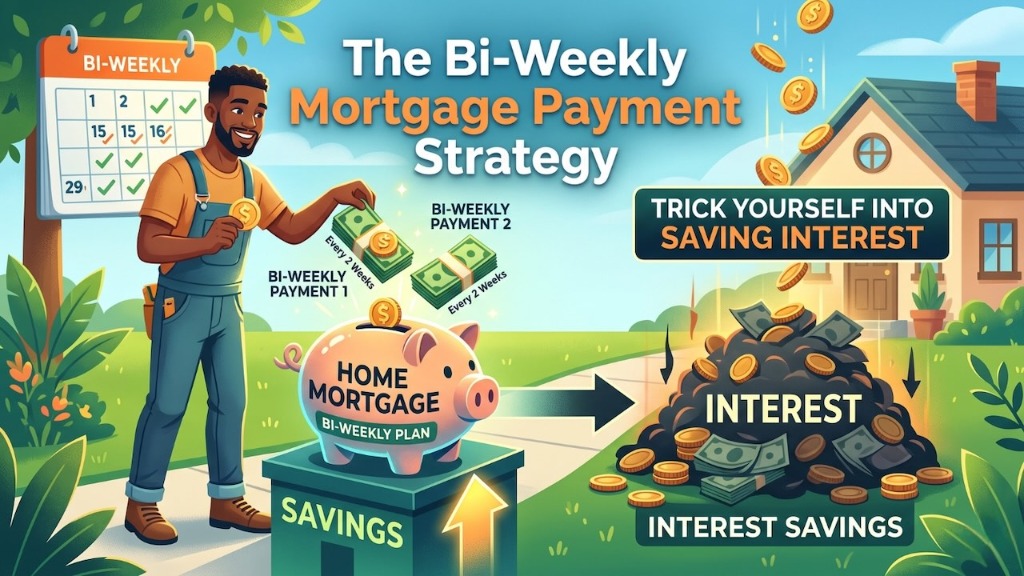
The Bi-Weekly Mortgage Payment Strategy: Trick Yourself Into Saving Interest
Paying your mortgage bi-weekly is one of the easiest ways to shorten your loan term and save tens of thousands in interest without feeling the pinch. Learn how it works.

Credit Score vs. Mortgage Rate: How a 50-Point Swing Costs You Thousands
Your credit score is the single biggest factor determining your mortgage interest rate. Learn how a small 50-point credit score shift can save or cost you thousands.
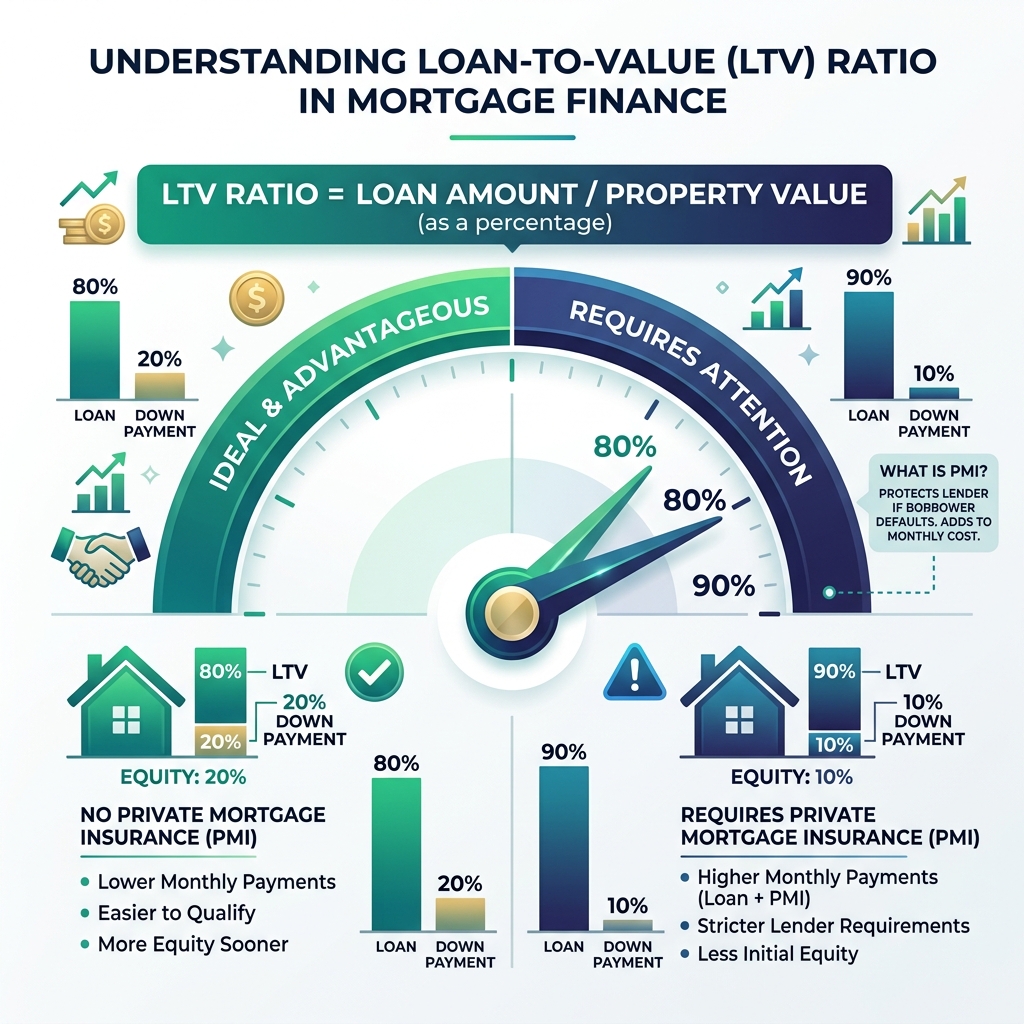
Mortgage PMI 101: What is Private Mortgage Insurance and How to Avoid It
Private Mortgage Insurance (PMI) adds hundreds of dollars to your monthly payment. Learn what PMI is, how it works, and key strategies to avoid or cancel it.
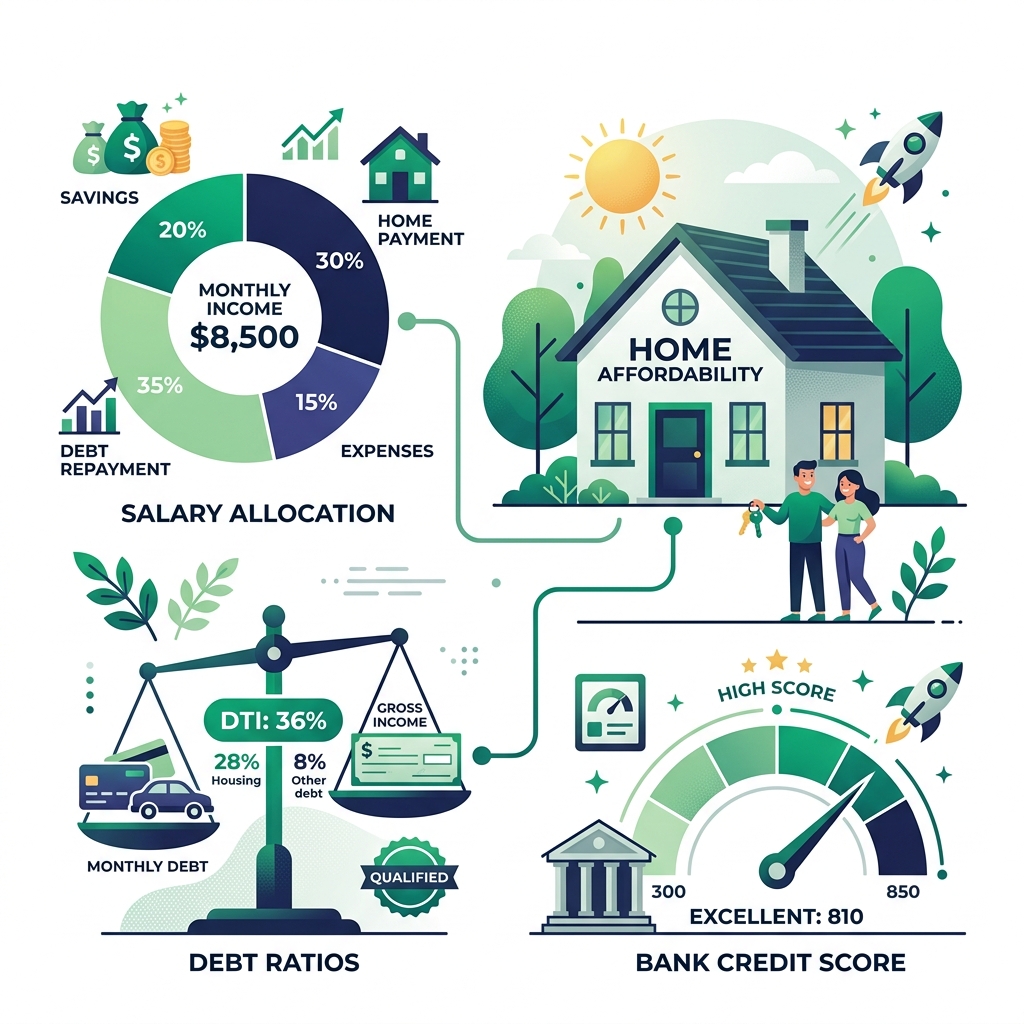
How to Avoid Becoming "House Poor": Calculating Your True Affordability
Purchasing a home that stretches your budget to the limit can lead to financial stress. Learn how to calculate your true affordability and avoid becoming house poor.

The Best Time of Year to Buy a House: A Guide to Real Estate Seasonality
Real estate activity shifts with the seasons. Learn when to find the most choices, the lowest prices, and how to use seasonality to your advantage.

Why You Should Never Waive a Home Inspection Contingency
Waiving a home inspection contingency might help you win a bidding war, but it exposes you to catastrophic financial risks. Learn why keeping this safeguard is essential.
Frequently Asked Questions
PITI stands for Principal, Interest, Taxes, and Insurance. These are the four standard components of a monthly mortgage bill. Principal directly pays down the loan balance; interest is the lender's fee; taxes go to local county assessments; and insurance protects the home against property damages or defaults (PMI).
A larger down payment reduces the total amount you need to borrow, which lowers both your monthly Principal & Interest payment and the lifetime interest expense. Additionally, if you make a down payment of 20% or more, you avoid paying Private Mortgage Insurance (PMI), saving you approximately 0.5% to 1.5% of the loan value annually.
A 30-year mortgage offers lower, more comfortable monthly payments, providing budget flexibility but accumulating higher interest costs over time. A 15-year mortgage has higher monthly payments, but you build home equity twice as fast, qualify for lower interest rates, and save tens of thousands of dollars in lifetime interest costs.
An escrow account is a holding account managed by your mortgage servicer. A portion of your monthly payment is deposited into it to cover property taxes and homeowners insurance when they come due. Most lenders require an escrow account if your down payment is less than 20%, ensuring that essential tax and insurance bills are never delinquent.
Yes. Under federal law, PMI must be canceled automatically once your loan balance reaches 78% of the home's original purchase price. You can request cancellation once your balance drops to 80%, or if a new appraisal shows your home value has appreciated enough to give you 20% equity.
Because interest is calculated monthly based on your remaining principal balance, making extra payments reduces the principal balance directly. This permanently lowers the interest charges for every subsequent month. Over time, this compounding effect shaves years off your term and saves large sums in finance fees.