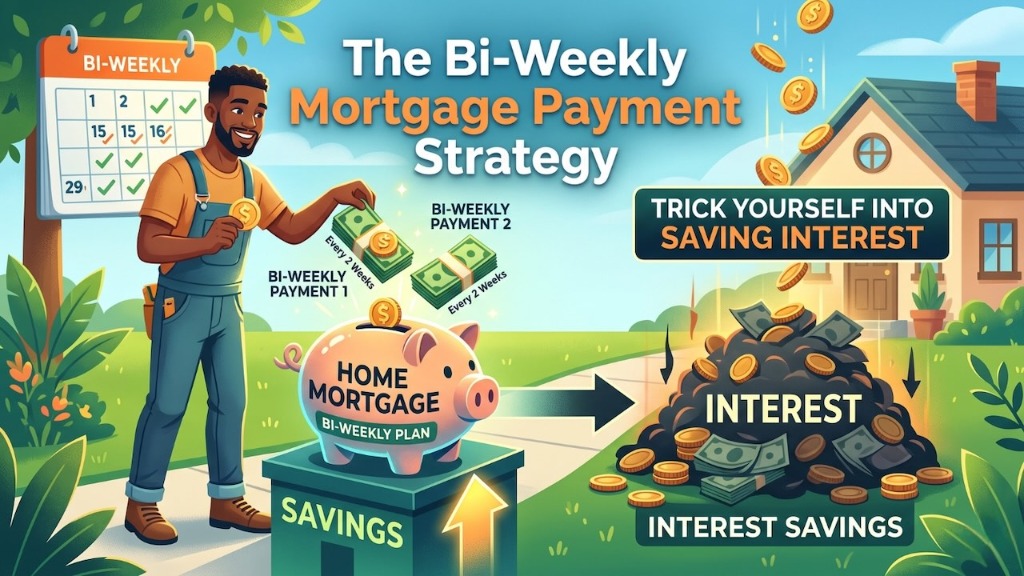

An extra mortgage payment is any additional sum paid directly toward your loan's principal balance beyond the monthly required Principal and Interest payment. By bypassing the interest fee entirely, every extra dollar reduces the interest-bearing balance, compounding your savings and shortening the duration of the loan. For example, adding just $200 a month to a standard 30-year fixed mortgage of $300,000 at 6.5% interest will save over $55,000 in interest and shave more than 4.5 years off your payoff timeline.
When you sign a 30-year mortgage, it is easy to assume you are locked into that timeline for three decades. However, the standard amortization schedule is not a binding commitment, but simply a baseline. By understanding how mortgage interest is calculated, you can utilize the math of prepayments to achieve financial freedom years ahead of schedule.
To run your own numbers, you can model different payoff options with our interactive early payoff calculator. Let us examine how extra payments directly combat the structure of long-term debt.
The Math of Mortgage Interest Front-Loading
To understand why extra payments are so powerful, you have to understand how interest is billed. Mortgage loans utilize a process called amortization, where your payment is split between the interest fee and the principal balance paydown.
In the initial years of a 30-year loan, your monthly payments are heavily weighted toward interest. For instance, in the first month of a $300,000 loan at 6.5% interest, over 85% of your payment goes straight to the lender as interest, leaving only a tiny fraction to actually chip away at your debt.
Because interest is calculated every month based on your outstanding principal balance, reducing that balance sooner causes a compounding cascade of savings. Any extra payment you make goes 100% toward the principal balance, immediately bypassing the interest calculation. This permanently reduces the base amount on which all future monthly interest is computed.
Case Study: The Impact of an Extra $200 a Month
Let us look at a real-world scenario to see the math in action. Suppose you buy a home with the following loan profile:
- Loan Amount: $300,000
- Interest Rate: 6.50% Fixed
- Loan Term: 30 Years (360 months)
- Required Monthly Payment (P&I Only): $1,896.20
If you make only the required payment for 30 years, you will pay a staggering $382,633.56 in total interest in addition to the $300,000 principal, bringing the total cost of your home to $682,633.56.
Now, let us look at what happens if you add an extra $200 per month from day one:
| Mortgage Strategy | Monthly Payment | Total Interest Paid | Time to Payoff |
|---|---|---|---|
| Standard Schedule | $1,896.20 | $382,633.56 | 30 Years |
| Accelerated Schedule (+$200/mo) | $2,096.20 | $326,989.14 | 25 Years, 5 Months |
| Total Savings / Time Shaved | +$200.00 | -$55,644.42 | 4 Years, 7 Months Saved |
By committing an extra $200 a month, you shave 4 years and 7 months off your mortgage timeline. Even more impressive, you keep $55,644.42 in interest fees in your own pocket instead of giving it to the bank. That is a guaranteed, tax-free return on your money.

Figure 1: How adding $200 monthly shifts the amortization curve, paying off the loan balance years early and cutting total interest.
How to Ensure Your Extra Payments Are Applied Correctly
Under standard credit guidelines governed by the Consumer Financial Protection Bureau, loan servicers must apply payments in accordance with your contract. However, when paying extra, you must explicitly designate how the funds should be allocated.
If you simply write a check for $2,096.20 instead of $1,896.20 without instruction, the servicer might apply the extra $200 as a prepayment toward next month's regular payment. This does not save you interest; it merely pushes your next payment due date forward.
To ensure your extra payments work for you, follow these standard practices:
- Use the "Principal Only" Option: When paying online, check the box that allocates the extra sum strictly as a principal reduction.
- Write it on the Check: If mailing physical checks, write "Apply extra $200 to principal balance only" on the memo line and on the payment coupon.
- Verify Your Monthly Statement: Check your loan balance next month to ensure the principal balance was reduced by the full extra amount. You can track your expected balance drops using our amortization schedule generator.
The Bottom Line
The math of prepayments is one of the most powerful wealth-building strategies available to homeowners. By redirecting cash into your principal balance, you secure a guaranteed return on investment while establishing absolute financial flexibility.
Calculate Your Payoff Savings Today
Connect your loan amount, interest rate, and extra payment amount. Calculate exactly how many years you can shave off and how much interest you can save.